
SCHOLARSHIP APPLICATION: (Deadline: APRIL 30th, 2027)
Please ensure all fields are filled in completely.To view previous winner: Click Here
(IF YOU HAVE ANY QUESTIONS, PLEASE EMAIL THE PROGRAM ADMINISTRATOR AT RYAN@STUDENTSCHOLARSHIPS.ORG)
Fork Mounted Work Platform
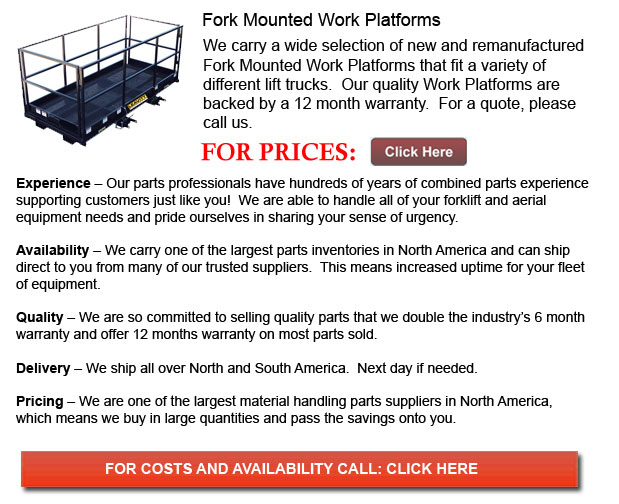

Fork Mounted Work Platform - There are certain requirements outlining forklift safety requirements and the work platform ought to be made by the manufacturer to comply. A customized designed work platform can be constructed by a professional engineer so long as it also satisfies the design standards according to the applicable lift truck safety requirements. These custom-made designed platforms must be certified by a professional engineer to maintain they have in truth been manufactured in accordance with the engineers design and have followed all standards. The work platform ought to be legibly marked to display the name of the certifying engineer or the manufacturer.
Particular information is needed to be marked on the machinery. For instance, if the work platform is custom-made made, a unique code or identification number linking the certification and design documentation from the engineer needs to be visible. When the platform is a manufactured design, the serial or part number in order to allow the design of the work platform have to be marked in able to be associated to the manufacturer's documentation. The weight of the work platform when empty, in addition to the safety standard which the work platform was built to meet is among other necessary markings.
The utmost combined weight of the equipment, individuals and supplies allowed on the work platform is known as the rated load. This particular information should likewise be legibly marked on the work platform. Noting the minimum rated capacity of the forklift which is needed in order to safely handle the work platform can be determined by specifying the minimum wheel track and lift truck capacity or by the make and model of the lift truck that could be utilized along with the platform. The process for fastening the work platform to the forks or fork carriage must also be specified by a professional engineer or the manufacturer.
One more requirement intended for safety ensures the flooring of the work platform has an anti-slip surface placed not farther than 8 inches above the normal load supporting area of the tines. There must be a means offered so as to prevent the carriage and work platform from pivoting and rotating.
Use Requirements
The lift truck should be used by a qualified operator who is authorized by the employer so as to utilize the machinery for raising staff in the work platform. The lift truck and the work platform must both be in compliance with OHSR and in good condition previous to the application of the system to hoist personnel. All producer or designer directions that relate to safe operation of the work platform must likewise be accessible in the workplace. If the carriage of the lift truck is capable of pivoting or rotating, these functions need to be disabled to maintain safety. The work platform has to be secured to the forks or to the fork carriage in the particular manner given by the work platform manufacturer or a professional engineer.
Other safety ensuring requirements state that the weight of the work platform together with the maximum rated load for the work platform must not go beyond one third of the rated capacity of a rough terrain forklift or one half the rated capacity of a high forklift for the configuration and reach being utilized. A trial lift is required to be performed at every job location immediately prior to hoisting employees in the work platform. This process ensures the lift truck and be placed and maintained on a proper supporting surface and likewise in order to ensure there is enough reach to position the work platform to allow the job to be finished. The trial process also checks that the boom can travel vertically or that the mast is vertical.
previous to utilizing a work platform a test lift must be done right away prior to lifting employees to ensure the lift can be correctly positioned on an appropriate supporting surface, there is adequate reach to place the work platform to perform the required task, and the vertical mast is able to travel vertically. Utilizing the tilt function for the mast can be utilized so as to assist with final positioning at the job site and the mast should travel in a vertical plane. The trial lift determines that ample clearance could be maintained between the elevating mechanism of the lift truck and the work platform. Clearance is likewise checked according to overhead obstructions, scaffolding, storage racks, and whatever nearby structures, as well from hazards like energized device and live electrical wire.
Systems of communication need to be implemented between the forklift driver and the work platform occupants to be able to safely and efficiently manage operations of the work platform. If there are several occupants on the work platform, one person should be chosen to be the primary individual responsible to signal the lift truck driver with work platform motion requests. A system of hand and arm signals have to be established as an alternative means of communication in case the main electronic or voice means becomes disabled during work platform operations.
Safety standards dictate that personnel are not to be transferred in the work platform between task locations and the platform should be lowered to grade or floor level before anyone enters or exits the platform also. If the work platform does not have guardrail or enough protection on all sides, each occupant must have on an appropriate fall protection system connected to a selected anchor point on the work platform. Staff should carry out functions from the platform surface. It is strictly prohibited they do not stand on the guardrails or use whatever tools so as to add to the working height on the work platform.
Finally, the driver of the lift truck should remain within ten feet or three meters of the controls and maintain contact visually with the lift truck and work platform. When occupied by employees, the driver has to adhere to above standards and remain in full contact with the occupants of the work platform. These instructions assist to maintain workplace safety for everyone.
Click to Download the PDF
Forklift Parts


TOLL FREE: 1-888-695-7994
forkliftpartswisconsin.com
Email Us
About Us